IS-ISの主要TLV
IS-ISのパケットは、短い固定ヘッダーの後ろがすべてTLV(Type-Length-Value)です。隣接する相手のID、エリアアドレス、IPプレフィックス、認証情報、ホスト名まで、運ぶ情報はどれもTLVとして並びます。
この形のおかげで、IS-ISはプロトコル本体を変えずに新しい情報を運べます。IPv6もセグメントルーティングも、新しいTLVを足すだけで載りました。
主要なTLVがどのパケットに載り、どれが規格由来でどれがIETFの拡張なのかを整理し、IOS XRのキャプチャで実際に確認します。パケットの種類と共通ヘッダーはIS-ISパケットの種類とヘッダーフォーマットで解説しています。
TLVの形と、知らないTLVの扱い
TLVはCODE 1バイト+LENGTH 1バイト+VALUEです(ISO/IEC 10589:2002の9.5〜9.13)。規格はこれを「VARIABLE LENGTH FIELDS」と呼び、先頭のバイトをCODEと表記します。「TLV」は規格の語ではありませんが、実装も文献もこう呼ぶため本記事もTLVで統一します。
| 要素 | 長さ | 内容 |
|---|---|---|
| CODE | 1バイト | そのTLVが何を表すかを示す番号(0〜255) |
| LENGTH | 1バイト | VALUEの長さ(0〜255バイト) |
| VALUE | LENGTHバイト | 中身 |
LENGTHが1バイトなので、1つのTLVは最大255バイトです。隣接やプレフィックスが多くて入り切らないときは、同じCODEのTLVを繰り返し並べます。
拡張が効く理由は、規格が未知のCODEの扱いを決めているからです。IIHとSNPでは「受信したPDU中の認識できないコードは無視する」(9.5〜9.7、9.10〜9.13)、LSPでは「認識できないコードは無視し、変更せずそのまま中継する」(9.8)と定めています。知らないTLVがあっても隣接は壊れず、フラッディングも止まりません。
どのPDUにどのTLVが載るか
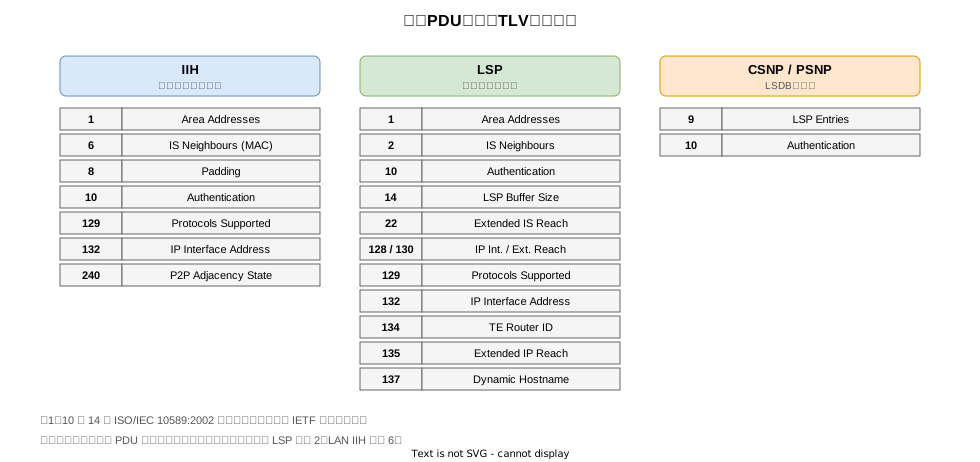
同じ役割でも、載るPDUが違えばCODEも違います。隣接するルータを示すTLVは、LSPでは2(またはwideの22)、LAN IIHでは6です。前者はSystem ID、後者はMACアドレスを運びます。
| TLV | 名称 | IIH | LSP | SNP | 出典 |
|---|---|---|---|---|---|
| 1 | Area Addresses | ○ | ○ | — | ISO/IEC 10589:2002 |
| 2 | IS Neighbours | — | ○ | — | ISO/IEC 10589:2002 |
| 6 | IS Neighbours(MACアドレス) | ○ | — | — | ISO/IEC 10589:2002 |
| 8 | Padding | ○ | — | — | ISO/IEC 10589:2002 |
| 9 | LSP Entries | — | — | ○ | ISO/IEC 10589:2002 |
| 10 | Authentication | ○ | ○ | ○ | ISO/IEC 10589:2002 |
| 13 | Purge Originator Identification | — | ○ | — | RFC 6232 |
| 14 | LSP Buffer Size | — | ○ | — | ISO/IEC 10589:2002 |
| 22 | Extended IS Reachability | — | ○ | — | RFC 5305 |
| 128 | IP Internal Reachability | — | ○ | — | RFC 1195 |
| 129 | Protocols Supported | ○ | ○ | — | RFC 1195 |
| 130 | IP External Reachability | — | ○ | — | RFC 1195 |
| 132 | IP Interface Address | ○ | ○ | — | RFC 1195 |
| 134 | TE Router ID | — | ○ | — | RFC 5305 |
| 135 | Extended IP Reachability | — | ○ | — | RFC 5305 |
| 137 | Dynamic Hostname | — | ○ | — | RFC 5301 |
| 240 | P2P Adjacency State | ○ | — | — | RFC 5303 |
CODEの割り当てはIANAのIS-IS TLV Codepointsレジストリで管理されています。
規格が定めるTLVは11個
ISO/IEC 10589:2002が定義するCODEは1〜10と14の11個だけです。
| CODE | 名称(規格の表記) | 載るPDU | 内容 |
|---|---|---|---|
| 1 | Area Addresses | IIH / LSP | そのISのエリアアドレスの集合 |
| 2 | Intermediate System Neighbours | LSP | 隣接するISと疑似ノード(メトリック付き) |
| 3 | End System Neighbours | レベル1 LSP | 隣接するES(エンドシステム) |
| 4 | Partition Designated Level 2 IS | レベル2 LSP | パーティション修復機能で使う代表ルータ |
| 5 | Prefix Neighbours | レベル2 LSP | 到達可能なアドレスプレフィックス(CLNP) |
| 6 | Intermediate System Neighbours | LAN IIH | 隣接するISのMACアドレス(6オクテット) |
| 7 | Intermediate System Neighbours | LAN IIH | 可変長SNPAアドレス版 |
| 8 | Padding | IIH | MTUを確かめるための詰め物 |
| 9 | LSP Entries | CSNP / PSNP | LSPのID・シーケンス番号・寿命・チェックサム |
| 10 | Authentication Information | すべて | 認証情報 |
| 14 | originatingLSPBufferSize | LSP | 自分が生成するLSPの最大サイズ |
このうち3・4・5・7はOSI時代の機能のためのもので、IPだけを運ぶ今のネットワークには流れません。ESの隣接(3)はエンドシステムをIS-ISが直接扱う場合の、プレフィックス(5)はCLNPの経路のためのものです。実際に観測できるのは1・2・6・8・9・10・14の7つです。
RFC 1195がIPのために足したTLV
IS-ISでIPを運ぶための拡張はRFC 1195(Integrated IS-IS)が定義しました。CODEは128以降を使います。
| TLV | 名称 | 内容 |
|---|---|---|
| 128 | IP Internal Reachability | IS-IS自身が持つIPプレフィックス(メトリック付き) |
| 129 | Protocols Supported | 運べるネットワーク層プロトコル。IPv4は0xCC(NLPID) |
| 130 | IP External Reachability | 他のプロトコルから再配布したIPプレフィックス |
| 132 | IP Interface Address | そのルータのインタフェースのIPアドレス |
128と130の違いは経路の出どころです。IS-IS自身の経路が128、再配布された経路が130に入ります。どちらもメトリックは1バイト×4の構造で、値に使えるのは6ビット(narrowメトリック。詳細はIS-ISのメトリック)。
なお128・130のdefaultメトリックのbit 8は、後にRFC 5302がup/downビットとして再定義しました。レベル2からレベル1へ漏らした経路に印を付け、ループを防ぐためのものです。
RFC 5305のwideメトリックとサブTLV

RFC 5305は、メトリックを広げた新しいTLVを2つ定義しました。
| TLV | 名称 | メトリック幅 | 置き換える相手 |
|---|---|---|---|
| 22 | Extended IS Reachability | 24ビット(3バイト) | TLV 2 |
| 135 | Extended IP Reachability | 32ビット(4バイト) | TLV 128 / 130 |
| 134 | TE Router ID | — | (新規)LSPを出したルータの4バイトのルータID |
重要なのはサブTLVを持てることです。TLV 22は「System ID(7バイト)+メトリック(3バイト)+サブTLV長(1バイト)+サブTLV(0〜244バイト)」という構造で、サブTLVもCODE / LENGTH / VALUEの形をとります。
| サブTLV | 内容 |
|---|---|
| 3 | Administrative group(color、リソースクラス) |
| 6 | IPv4 interface address |
| 8 | IPv4 neighbor address |
| 9 / 10 / 11 | 最大帯域 / 予約可能帯域 / 未予約帯域 |
| 18 | TE Default Metric |
TLV 135も同様に「メトリック(4バイト)+制御バイト(up/downビット・サブTLVの有無・プレフィックス長)+プレフィックス+サブTLV」という形です。
トラフィックエンジニアリングもセグメントルーティングも、この入れ子の上に載っています。TLVのLENGTHが1バイトである以上、CODEを増やすだけでは255バイトの壁を越えられません。サブTLVは、リンクやプレフィックスに属性をいくつでも足せるようにする仕掛けです。
たとえばRFC 7794はTLV 135のサブTLV 4としてPrefix Attribute Flagsを定義し、そのプレフィックスがどのルータのものかを示すNフラグを運びます。セグメントルーティングでNode-SIDを判定するのに使われます。
そのほかに見かけるTLV
| TLV | 名称 | 出典 | 役割 |
|---|---|---|---|
| 13 | Purge Originator Identification | RFC 6232 | LSPをパージしたルータのSystem ID(IS-ISのLSPとリンクステートデータベース) |
| 137 | Dynamic Hostname | RFC 5301 | System IDに対応するホスト名。showの表示が読みやすくなる |
| 211 | Restart Signaling | RFC 5306 | グレースフルリスタート |
| 240 | Point-to-Point Adjacency State | RFC 5303 | ポイントツーポイントの3ウェイハンドシェイク(IS-ISの隣接関係の確立と状態遷移) |
| 242 | IS-IS Router CAPABILITY | RFC 7981 | ルータ単位の能力。セグメントルーティングのSRGBなどを運ぶ |
| 232 / 236 | IPv6 Interface Address / IPv6 Reachability | RFC 5308 | IPv6のアドレスとプレフィックス |
| 222 / 229 / 235 | MT-ISN / Multi-Topology / MT IP Reachability | RFC 5120 | マルチトポロジ |
IPv6とマルチトポロジのTLVはIS-ISのIPv6対応とマルチトポロジで解説しています。
実機での検証
検証環境

R1 — R2 — R3の3台で、R1 — R2をpoint-to-point、R2 — R3をbroadcastにします。エリアも分け、R1はレベル1、R2はレベル1-2、R3はレベル2のみです。
こうすると1つのラボで、ポイントツーポイントのTLV(240・8)とブロードキャストのTLV(6・疑似ノードLSP・CSNPの9)、そして2種類のエリアアドレス(1)がまとめて観測できます。
| ルータ | レベル | NET | Lo0 | リンク |
|---|---|---|---|---|
| R1 | level-1 | 49.0001.0010.0100.1001.00 | 1.1.1.1/32 | Gi0/0/0/0 10.1.2.1(p2p) |
| R2 | level-1-2 | 49.0001.0020.0200.2002.00 | 2.2.2.2/32 | Gi0/0/0/0 10.1.2.2(p2p、L1)/ Gi0/0/0/1 10.2.3.2(LAN、L2) |
| R3 | level-2-only | 49.0002.0030.0300.3003.00 | 3.3.3.3/32 | Gi0/0/0/0 10.2.3.3(LAN) |
検証のSTEP
| STEP | 操作 | 確かめること |
|---|---|---|
| 0 | 既定(narrow、再配布なし) | IIH / LSP / CSNP / PSNP それぞれに載るTLV |
| 1 | R3でスタティックルートをIS-ISに再配布 | 外部経路のTLV 130と、内部のTLV 128との違い |
| 2 | 全台をmetric-style wideに | TLV 22 / 135への入れ替わりと、サブTLVの中身 |
| 3 | すべて元に戻す(最終状態) | STEP 0と同じ |
PDUごとのTLV(STEP 0)
まずポイントツーポイントのIIHです。キャプチャーのNo.1にあたります。
    ...1 0001 = PDU Type: P2P HELLO (17)
    Point-to-point Adjacency State (t=240, l=15)
    Protocols Supported (t=129, l=1)
    Restart Signaling (t=211, l=3)
    Area address(es) (t=1, l=4)
    IP Interface address(es) (t=132, l=4)
    Unknown code (t=21, l=4)
    Padding (t=8, l=255)
    Padding (t=8, l=255)
    Padding (t=8, l=255)
    Padding (t=8, l=255)
    Padding (t=8, l=255)
Padding (t=8, l=147)TLV 240(P2P Adjacency State)と、末尾に並ぶTLV 8(Padding)がポイントツーポイントらしいところです。TLV 8は1つ255バイトが上限なので、同じCODEを6回繰り返してMTUを確かめる大きさまで詰めています。
Unknown code (t=21, l=4)は、tsharkが解釈できなかったTLVです。
    Unknown code (t=21, l=4)
        Type: 21
        Length: 4
        Dissector for IS-IS CLV (21) code not implemented, Contact Wireshark developers if you want this supported
            [Expert Info (Note/Undecoded): Dissector for IS-IS CLV (21) code not implemented, Contact Wireshark developers if you want this supported]
                [Dissector for IS-IS CLV (21) code not implemented, Contact Wireshark developers if you want this supported]
                [Severity level: Note]
                [Group: Undecoded]
CODE 21はRFC 9681「IS-IS Fast Flooding」(2024年、Experimental)が定義したFlooding Parameters TLVで、LSPを速く配るためのパラメータをIIHとPSNPで交換します。解析ツールが知らなくても隣接は正常に確立しています。規格が「認識できないコードは無視する」と定めているとおりです。
ブロードキャスト側のIIHと比べます。キャプチャーのNo.2です。
    ...1 0000 = PDU Type: L2 HELLO (16)
    Protocols Supported (t=129, l=1)
    Restart Signaling (t=211, l=3)
    Area address(es) (t=1, l=4)
    IP Interface address(es) (t=132, l=4)
    IS Neighbor(s) (t=6, l=6)
    Padding (t=8, l=255)
    Padding (t=8, l=255)
    Padding (t=8, l=255)
    Padding (t=8, l=255)
    Padding (t=8, l=255)
Padding (t=8, l=155)TLV 240が無く、代わりに TLV 6(IS Neighbours)が入っています。同じ「隣接を伝える」役割でも、ポイントツーポイントは3ウェイの状態を、ブロードキャストは相手のMACアドレスを運びます。
次はLSPです。narrowのままなので、リンクはTLV 2、プレフィックスはTLV 128です。
    ...1 0010 = PDU Type: L1 LSP (18)
    Area address(es) (t=1, l=4)
    Originating neighbor buffer size (t=14, l=2)
    Protocols supported (t=129, l=1)
    IP Interface address(es) (t=132, l=4)
    Hostname (t=137, l=2)
    IP Internal reachability (t=128, l=24)
IS Reachability (t=2, l=12) Area address(es) (t=1, l=4)
Type: 1
Length: 4
Area address (3): 49.0001
Originating neighbor buffer size (t=14, l=2)
Type: 14
Length: 2
Neighbor originating buffer size: 1492
Protocols supported (t=129, l=1)
Type: 129
Length: 1
NLPID: IP (0xcc)
NLPID: 0xcc
IP Interface address(es) (t=132, l=4)
Type: 132
Length: 4
IPv4 interface address: 1.1.1.1
Hostname (t=137, l=2)
Type: 137
Length: 2
Hostname: R1
IP Internal reachability (t=128, l=24)
Type: 128
Length: 24
IPv4 prefix: 1.1.1.1/32
..00 0000 = Default Metric: 0
.0.. .... = Default Metric IE: Internal
0... .... = Distribution: Up
..00 0000 = Delay Metric: 0
1... .... = Delay Metric: Not Supported
.0.. .... = Delay Metric: Internal
..00 0000 = Expense Metric: 0
1... .... = Expense Metric: Not Supported
.0.. .... = Expense Metric: Internal
..00 0000 = Error Metric: 0
1... .... = Error Metric: Not Supported
.0.. .... = Error Metric: Internal
IPv4 prefix: 10.1.2.0/24
..00 1010 = Default Metric: 10
.0.. .... = Default Metric IE: Internal
0... .... = Distribution: Up
..00 0000 = Delay Metric: 0
1... .... = Delay Metric: Not Supported
.0.. .... = Delay Metric: Internal
..00 0000 = Expense Metric: 0
1... .... = Expense Metric: Not Supported
.0.. .... = Expense Metric: Internal
..00 0000 = Error Metric: 0
1... .... = Error Metric: Not Supported
.0.. .... = Error Metric: Internalエリアアドレス(1)・LSPバッファサイズ(14)・対応プロトコル(129)・インタフェースアドレス(132)・ホスト名(137)・プレフィックス(128)・隣接(2)が1つのLSPに並んでいます。
CSNPとPSNPはどちらもTLV 9だけです。
    ...1 1001 = PDU Type: L2 CSNP (25)
    LSP entries (t=9, l=48)

    ...1 1010 = PDU Type: L1 PSNP (26)
    LSP entries (t=9, l=16)
長さが違うのは載せているLSPの数の差です(CSNPは48バイト=3件、PSNPは16バイト=1件。1件あたり16バイト)。
再配布するとTLV 130が現れる(STEP 1)
R3に192.168.30.0/24のスタティックルートを作り、IS-ISへ再配布します。
    IP External reachability (t=130, l=12)
        Type: 130
        Length: 12
        IPv4 prefix: 192.168.30.0/24
            ..00 0000 = Default Metric: 0
            .0.. .... = Default Metric IE: Internal
            0... .... = Distribution: Up
            ..00 0000 = Delay Metric: 0
            1... .... = Delay Metric: Not Supported
            .0.. .... = Delay Metric: Internal
            ..00 0000 = Expense Metric: 0
            1... .... = Expense Metric: Not Supported
            .0.. .... = Expense Metric: Internal
            ..00 0000 = Error Metric: 0
            1... .... = Error Metric: Not Supported
.0.. .... = Error Metric: Internal同じLSPの中にTLV 128(自分のプレフィックス)とTLV 130(再配布したプレフィックス)が並びます。フィールドの構造は同じで、違うのはCODEだけです。
RP/0/RP0/CPU0:R3#show isis database
Thu Sep 10 04:33:18.603 UTC

IS-IS 1 (Level-2) Link State Database
LSPID                 LSP Seq Num  LSP Checksum  LSP Holdtime/Rcvd  ATT/P/OL
R2.00-00              0x0000000a   0xadd6        828  /1200         0/0/0
R3.00-00            * 0x00000007   0x45be        913  /*            0/0/0
R3.01-00              0x00000004   0xd0f9        1056 /*            0/0/0

 Total Level-2 LSP count: 3     Local Level-2 LSP count: 1
wideにするとTLV 22 / 135に入れ替わる(STEP 2)
3台ともmetric-style wideにします。
    Extended IP Reachability (t=135, l=37)
        Type: 135
        Length: 37
        Ext. IP Reachability: 3.3.3.3/32
            Metric: 0
            0... .... = Distribution: Up
            .1.. .... = Sub-TLV: Yes
            ..10 0000 = Prefix Length: 32
            IPv4 prefix: 3.3.3.3
            SubCLV Length: 3
            subTLV: Prefix Attribute Flags (c=4, l=1): Flags:--N
                Code: Prefix Attribute Flags (4)
                Length: 1
                Flags: 0x20, Node
                    0... .... = External Prefix: Not set
                    .0.. .... = Re-advertisement: Not set
..1. .... = Node: SetTLV 2は22に、TLV 128と130は135にまとまりました。プレフィックスごとに サブTLV 4(Prefix Attribute Flags)が付いており、ループバック 3.3.3.3/32 にはNフラグ(そのルータ自身のプレフィックス)が立っています。
再配布した経路を見ると、同じサブTLVのXフラグが立っています。
        Ext. IP Reachability: 192.168.30.0/24
            Metric: 0
            0... .... = Distribution: Up
            .1.. .... = Sub-TLV: Yes
            ..01 1000 = Prefix Length: 24
            IPv4 prefix: 192.168.30.0
            SubCLV Length: 3
            subTLV: Prefix Attribute Flags (c=4, l=1): Flags:X--
                Code: Prefix Attribute Flags (4)
                Length: 1
                Flags: 0x80, External Prefix
                    1... .... = External Prefix: Set
                    .0.. .... = Re-advertisement: Not set
                    ..0. .... = Node: Not set
wideにはTLV 130がありません。内部か外部かは、TLV 135のサブTLVのXフラグで表されます。narrowで「別のCODE」だったものが、wideでは「同じCODEのサブTLV」になったわけです。
show isis database verboseはサブTLVまで展開します。
R3.00-00              0x00000008   0xcdd8        971  /1200         0/0/0
  Area Address:   49.0002
  LSP MTU:        1492
  NLPID:          0xcc
  IP Address:     3.3.3.3
  Hostname:       R3
  Metric: 10         IS-Extended R3.01
  Metric: 0          IP-Extended 3.3.3.3/32
    Prefix Attribute Flags: X:0 R:0 N:1 E:0 A:0
  Metric: 10         IP-Extended 10.2.3.0/24
    Prefix Attribute Flags: X:0 R:0 N:0 E:0 A:0
  Metric: 0          IP-Extended 192.168.30.0/24
    Prefix Attribute Flags: X:1 R:0 N:0 E:0 A:0
R3.01-00              0x00000005   0xf8c0        971  /1200         0/0/0
  Metric: 0          IS-Extended R2.00
  Metric: 0          IS-Extended R3.00
元に戻す(STEP 3)
metric-styleと再配布、スタティックルートを削除すると初期状態に戻ります(STEP 0と3の..._run.txtが一致)。
RP/0/RP0/CPU0:R2#show isis database
Thu Sep 10 04:41:36.389 UTC

IS-IS 1 (Level-1) Link State Database
LSPID                 LSP Seq Num  LSP Checksum  LSP Holdtime/Rcvd  ATT/P/OL
R1.00-00              0x00000008   0x27f1        1040 /1200         0/0/0
R2.00-00            * 0x0000000e   0x926d        1050 /*            1/0/0

 Total Level-1 LSP count: 2     Local Level-1 LSP count: 1

IS-IS 1 (Level-2) Link State Database
LSPID                 LSP Seq Num  LSP Checksum  LSP Holdtime/Rcvd  ATT/P/OL
R2.00-00            * 0x00000010   0xa1dc        1050 /*            0/0/0
R3.00-00              0x00000009   0xdbbd        1020 /1200         0/0/0
R3.01-00              0x00000006   0xccfb        1020 /1200         0/0/0

 Total Level-2 LSP count: 3     Local Level-2 LSP count: 1
検証Configおよびshow結果
各STEPで3台から次の種類をルータごとに分けて取得しています。検証Configはこの..._run.txtです(最終状態はSTEP 3)。
| ファイル | 内容 |
|---|---|
..._show.txt | show version / show interface description / show route / show route isis / show isis / show isis hostname / show isis interface / show isis interface brief / show isis neighbors / show isis neighbors detail / show isis database / show isis database detail / show isis database verbose / show isis topology / show isis adjacency / show isis adjacency-log / show isis spf-log / show isis lsp-log / show isis statistics / show cef |
..._log.txt | そのSTEPの範囲だけに絞ったshow logging(STEP 0のみ起動時からの全履歴) |
..._run.txt | そのSTEP時点のshow running-config(=そのSTEPの検証Config) |
STEP 0:既定(narrow、再配布なし)
| ルータ | show出力 | syslog | running-config |
|---|---|---|---|
| R1 | show | log | run |
| R2 | show | log | run |
| R3 | show | log | run |
STEP 1:R3でスタティックルートを再配布
| ルータ | show出力 | syslog | running-config |
|---|---|---|---|
| R1 | show | log | run |
| R2 | show | log | run |
| R3 | show | log | run |
STEP 2:全台をmetric-style wideに
| ルータ | show出力 | syslog | running-config |
|---|---|---|---|
| R1 | show | log | run |
| R2 | show | log | run |
| R3 | show | log | run |
STEP 3:すべて元に戻す(最終状態)
| ルータ | show出力 | syslog | running-config |
|---|---|---|---|
| R1 | show | log | run |
| R2 | show | log | run |
| R3 | show | log | run |
キャプチャーファイルは、STEPごとにポイントツーポイント側(R1 — R2)とブロードキャスト側(R2 — R3)の2本です。
STEP 0のp2p側(isis-tlv-step0-p2p.pcap) をダウンロード
STEP 0のLAN側(isis-tlv-step0-lan.pcap) をダウンロード
STEP 1のp2p側(isis-tlv-step1-p2p.pcap) をダウンロード
STEP 1のLAN側(isis-tlv-step1-lan.pcap) をダウンロード
STEP 2のp2p側(isis-tlv-step2-p2p.pcap) をダウンロード
STEP 2のLAN側(isis-tlv-step2-lan.pcap) をダウンロード
参考
| 標準 | タイトル | 概要 |
|---|---|---|
| ISO/IEC 10589:2002(第2版) | Intermediate System to Intermediate System intra-domain routeing information exchange protocol | IS-IS本体の仕様。本記事が参照したのは、TLVの形と各PDUのCODEを定める9.5〜9.13(未知のCODEの扱いは9.5〜9.7と9.8)。 |
| IANA IS-IS TLV Codepoints | IS-IS TLV Codepoints | CODEの割り当てと、どのPDUに載るか(IIH / LSP / SNP)の一覧。 |
| RFC 1195 | Use of OSI IS-IS for Routing in TCP/IP and Dual Environments | IPを運ぶTLV 128 / 129 / 130 / 132を定義。 |
| RFC 5301 | Dynamic Hostname Exchange Mechanism for IS-IS | ホスト名のTLV 137を定義。 |
| RFC 5302 | Domain-Wide Prefix Distribution with Two-Level IS-IS | TLV 128 / 130のdefaultメトリックのbit 8をup/downビットとして再定義。 |
| RFC 5303 | Three-Way Handshake for IS-IS Point-to-Point Adjacencies | ポイントツーポイントIIHに載るTLV 240を定義。 |
| RFC 5305 | IS-IS Extensions for Traffic Engineering | TLV 22(24ビット)・135(32ビット)・134と、TLV 22のサブTLVを定義。 |
| RFC 6232 | Purge Originator Identification TLV for IS-IS | パージ元を示すTLV 13を定義。 |
| RFC 7794 | IS-IS Prefix Attributes for Extended IPv4 and IPv6 Reachability | TLV 135などのサブTLV 4(Prefix Attribute Flags)を定義。 |
| RFC 7981 | IS-IS Extensions for Advertising Router Information | ルータ単位の能力を運ぶTLV 242を定義。 |
関連記事
- IS-ISとは
- IS-ISのNSAPアドレスとNET(System ID)
- IS-ISの複数エリアアドレス(マルチホーミング)とエリアの統合・分割
- IS-ISのレベル1とレベル2(階層構造)
- IS-ISパケットの種類とヘッダーフォーマット
- IS-ISの隣接関係の確立と状態遷移
- IS-ISのDISと疑似ノード(Pseudonode)
- IS-ISのネットワークタイプ(broadcast / point-to-point)
- IS-ISのメトリック(narrow / wide)
- IS-ISの認証(hello-password / lsp-password)
- IS-ISのLSPとリンクステートデータベース
- IS-ISの主要TLV
- IS-ISのフラッディングとLSDB同期
- IS-ISのSPF計算と経路選択
- IS-ISのECMP(等コストマルチパス)
- IS-ISのATTビットとレベル1のデフォルトルート
- IS-ISのルートリークとup/downビット
- IS-ISの経路集約
- IS-ISのオーバーロードビット
- IS-ISのIPv6対応とマルチトポロジ(TLV 236 / MT ID 2)
- IS-ISのHelloとHolding Time
- IS-ISの収束タイマー(SPF / LSP生成)
- IS-ISのフラッディングのタイマー(LSP送信間隔・再送・CSNP / PSNP)
- IS-ISのリンク障害と経路切り替え
- IS-ISへの再配布(connected / static)
- IS-ISへのBGP経路の再配布